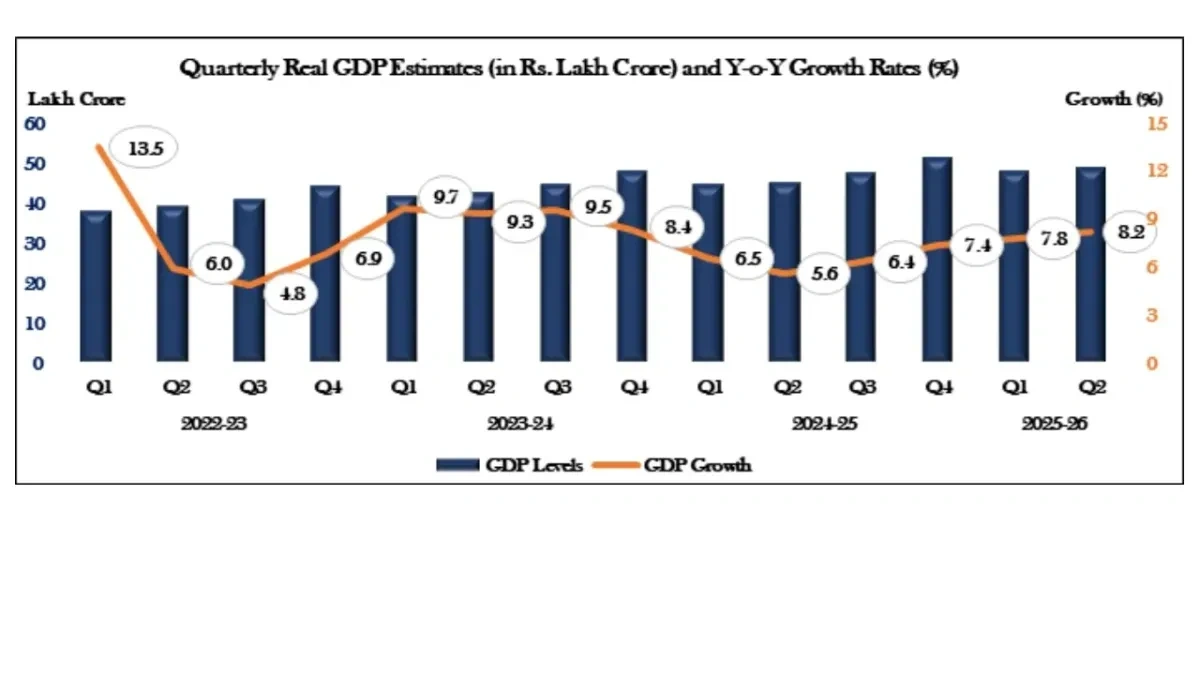
Alright, folks, let’s talk numbers. But not just any numbers – we’re diving into the juicy details of India’s latest GDP growth figures. We’re talking about that impressive 8.2% growth in the second quarter. Economists are taking note, and more importantly, they’re adjusting their future forecasts. But here’s the thing: what does this actually mean for you and me? It’s not just about bragging rights on the global stage, is it? Let’s dig deeper, shall we?
Decoding the Numbers | Why 8.2% Matters
An 8.2% GDP expansion is not just a statistic; it’s a signal. It’s a flashing green light indicating that the Indian economy is currently sprinting, not just jogging. Now, I know what you might be thinking: “Okay, great, but what’s driving this?” Good question! A significant part of this surge comes from strong performance in manufacturing and construction. Think about it: more factories churning out goods and more buildings going up means more jobs, more demand for raw materials, and more money circulating in the economy. That’s the basic multiplier effect in action. “But,” you might ask, “can this growth rate be sustained?” That’s the million-dollar question, isn’t it?
FY26 Forecasts | Optimism with a Pinch of Salt
So, economists revise forecasts . What does that mean? Well, before the Q2 data came out, many were predicting a slightly more subdued growth trajectory for fiscal year 2026. Now, armed with this fresh data, they’re dusting off their models and nudging those projections upward. But let’s be honest: economic forecasting is more art than science. There are so many variables at play – global economic conditions, geopolitical tensions, monsoon performance (yes, even that!), and government policies – that predicting the future with absolute certainty is impossible. Several factors such as fiscal deficit, private consumption, and investment rate are taken into account. It’s more about making informed guesses based on the best available information. Still, that doesn’t mean we should ignore these revisions. They reflect a growing confidence in India’s economic resilience.
The India Story | More Than Just a Growth Rate
What fascinates me is the India story underlying these numbers. We’re not just talking about a generic developing economy chugging along. India has a unique blend of factors working in its favor: a massive and young population, a growing middle class with increasing disposable income, and a government actively pushing for reforms and infrastructure development. Think about the infrastructure projects happening across the country – new highways, airports, and railways. These aren’t just concrete and steel; they’re arteries of economic activity, connecting people and businesses and facilitating trade. Consider the Production Linked Incentive (PLI) schemes. They’re designed to boost domestic manufacturing and attract foreign investment. They are intended to help create a more self-reliant and globally competitive Indian economy. It’s all part of a bigger picture.
Navigating the Future | Challenges and Opportunities
Let’s face it; it’s not all sunshine and roses. There are challenges aplenty. Inflation remains a persistent concern and global uncertainties could throw a wrench in the works. Geopolitical tensions, like the Russia-Ukraine conflict, can disrupt supply chains and impact energy prices, affecting India’s economic outlook. A key challenge for India is to translate high GDP growth into broad-based prosperity. It’s not enough for the top 1% to benefit; the gains must reach the masses, creating jobs and opportunities for everyone. This requires a focus on skill development, education, and social safety nets. And what about environmental sustainability? India needs to grow in a way that doesn’t compromise the well-being of future generations. As per the reports, there is a rise in the index of industrial production.
FAQ | Your GDP Growth Questions Answered
Frequently Asked Questions
What exactly does GDP measure?
GDP, or Gross Domestic Product, measures the total value of goods and services produced within a country’s borders in a specific period.
Why is GDP growth important?
GDP growth is important because it indicates the overall health and performance of an economy. Higher growth generally means more jobs and higher incomes.
How does India’s GDP growth compare to other countries?
India’s recent GDP growth has been among the highest globally, making it one of the fastest-growing major economies.
What factors can affect GDP growth?
Many factors can affect GDP growth, including government policies, global economic conditions, investment rates, and consumer spending.
Can I really use GDP to help plan my investments?
While the stock marketdoesn’t always follow perfect logic, it can be beneficial to study financial markets.
Where can I track current events on GDP?
Many sources share real-time news regarding GDP expansion such as the RBI’s official website, news agencies, and financial analysis websites.
So, where do we go from here? The upward revision of FY26 forecasts is a reason for optimism, but it’s not a guarantee of future success. India needs to continue its reforms, address its challenges, and leverage its strengths to sustain this growth momentum. It’s a marathon, not a sprint. And as we continue this journey, it’s crucial to remember that the ultimate goal is not just to increase GDP but to improve the lives of all Indians. That, my friends, is the real bottom line. As the Nifty soars, so must the economy.



Leave feedback about this