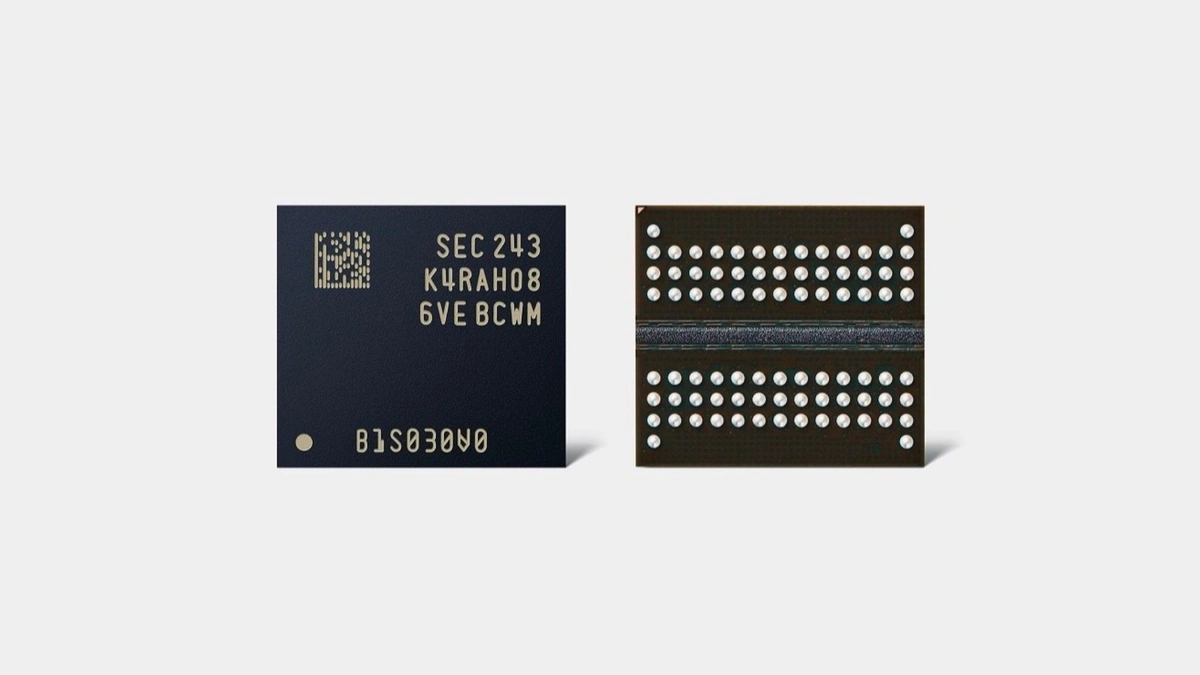
Okay, let’s be real. You’re probably scrolling through tech news, half-interested, and wondering why you should care about something called LPDDR6 memory. I get it. Tech jargon can be a snore. But here’s the thing: this new memory standard is about to drastically change your mobile experience. And I’m not just talking about slightly faster loading times. We’re talking about a paradigm shift.
So, What Exactly IS LPDDR6? (And Why Should I Care?)
LPDDR stands for Low Power Double Data Rate. Each new generation promises more bandwidth and reduced power consumption. LPDDR6 is poised to be the successor to the current LPDDR5X memory standard. But why is it important? It’s all about speed and efficiency. Think of it like this: your phone’s memory is like a highway. The wider the highway (bandwidth), the more data can travel at once. The more efficient the highway (lower power consumption), the less gas (battery) you burn getting there.
The implications? Faster app loading, smoother multitasking, and improved battery life – especially during graphically intense tasks like gaming or video editing. Wikipedia explains the technical details well, but the practical benefits for the average user are immense. This isn’t just a spec bump; it’s a fundamental upgrade that will unlock new possibilities for mobile devices.
The “Why” Behind the Hype: Beyond Just Speed
Here’s where things get interesting. It’s easy to get caught up in the raw numbers – the megahertz and gigabytes. But the real story is about what this increased memory bandwidth enables. Think about the rise of AI. On-device AI processing is becoming increasingly common, from image recognition to real-time language translation. These tasks are incredibly memory-intensive. Faster memory standards like LPDDR6 will be absolutely crucial for making these AI features seamless and responsive.
And it’s not just AI. High refresh rate displays (120Hz, 144Hz, and beyond) are becoming standard on smartphones. These buttery-smooth displays demand a lot of data to render each frame. LPDDR6 ensures that your phone can keep up without draining your battery in record time. Let me rephrase that for clarity – Without faster memory standards your phone battery is going to drain more rapidly.
The Tech Behind the Scenes: What Makes LPDDR6 Tick?
I initially thought it was straightforward, but then I realized the actual innovation comes from a few key areas. For starters, it’s the improvements in data transfer rates. We are talking about a potential doubling, or even tripling, of the speeds we see today. Then there’s the power efficiency. Nobody wants a blazing-fast phone that dies after an hour of use. Manufacturers are working hard to minimize power consumption through advanced architecture and voltage scaling. And finally, there is the improved signal integrity which allows for more reliable data transfer at higher speeds. All these advancements working in unison make the promise of LPDDR6 a very enticing prospect for the future of mobile technology.
Potential Roadblocks and Challenges
Of course, it’s not all sunshine and roses. There are always challenges when introducing new technology. One major hurdle is cost. New memory standards are typically more expensive to produce, which could translate to higher prices for smartphones. Another challenge is integration. Phone manufacturers need to optimize their designs to take full advantage of LPDDR6. This requires careful engineering and collaboration between memory vendors and device makers. A common mistake I see people make is assuming that new technology can be seamlessly integrated into existing designs. It’s never that simple.
Furthermore, the entire industry is waiting on JEDEC to publish the actual LPDDR6 specifications. As per the latest industry reports, the final specifications are expected to be released within the next few months. Without these specifications, device manufacturers are unable to test and integrate LPDDR6 into their devices. What fascinates me is how quickly the technology landscape can change and how these roadblocks can either be overcome or can significantly delay the rollout of new tech. Speaking of rollout… check out this related article about memory technology.
When Can We Expect to See LPDDR6 in Our Devices?
That’s the million-dollar question, isn’t it? Predicting the future of tech is always tricky, but here’s my best guess. We’ll likely see the first LPDDR6-equipped smartphones in late 2024 or early 2025. Of course, this depends on several factors, including the aforementioned standardization process and the pace of adoption by device manufacturers. Initially, LPDDR6 will likely be featured in high-end flagship phones. As production costs come down, it will gradually trickle down to mid-range devices. But, and this is important, don’t expect to see it in budget phones anytime soon.
FAQ About LPDDR6 Memory
Will LPDDR6 make my old phone faster?
No, LPDDR6 is a hardware standard. It requires new memory chips and a compatible motherboard. Your existing phone won’t be able to utilize it.
What are the main benefits of LPDDR6 over LPDDR5X?
The primary benefits are increased bandwidth (faster speeds) and improved power efficiency (longer battery life).
Will LPDDR6 only benefit smartphones?
No, while smartphones will be a major beneficiary, LPDDR6 can also improve the performance of laptops, tablets, and other portable devices.
Is LPDDR6 the same as UFS 4.0?
No. UFS 4.0 is related to flash storage. LPDDR6 is memory standard for RAM.
Will I notice a huge difference with LPDDR6?
Yes. You’ll see improvements in loading times, multi-tasking, and overall responsiveness. Particularly on devices using AI functionalities .
So, there you have it. LPDDR6 memory isn’t just another tech spec; it’s a key enabler of future mobile experiences. It’s about making our devices faster, more efficient, and more capable. And that, my friend, is something to be excited about. What fascinates me is the possibilities this opens up for future smartphones, bringing desktop-level performance to our pockets. The era of truly powerful mobile computing is just around the corner.



Leave feedback about this