Introduction
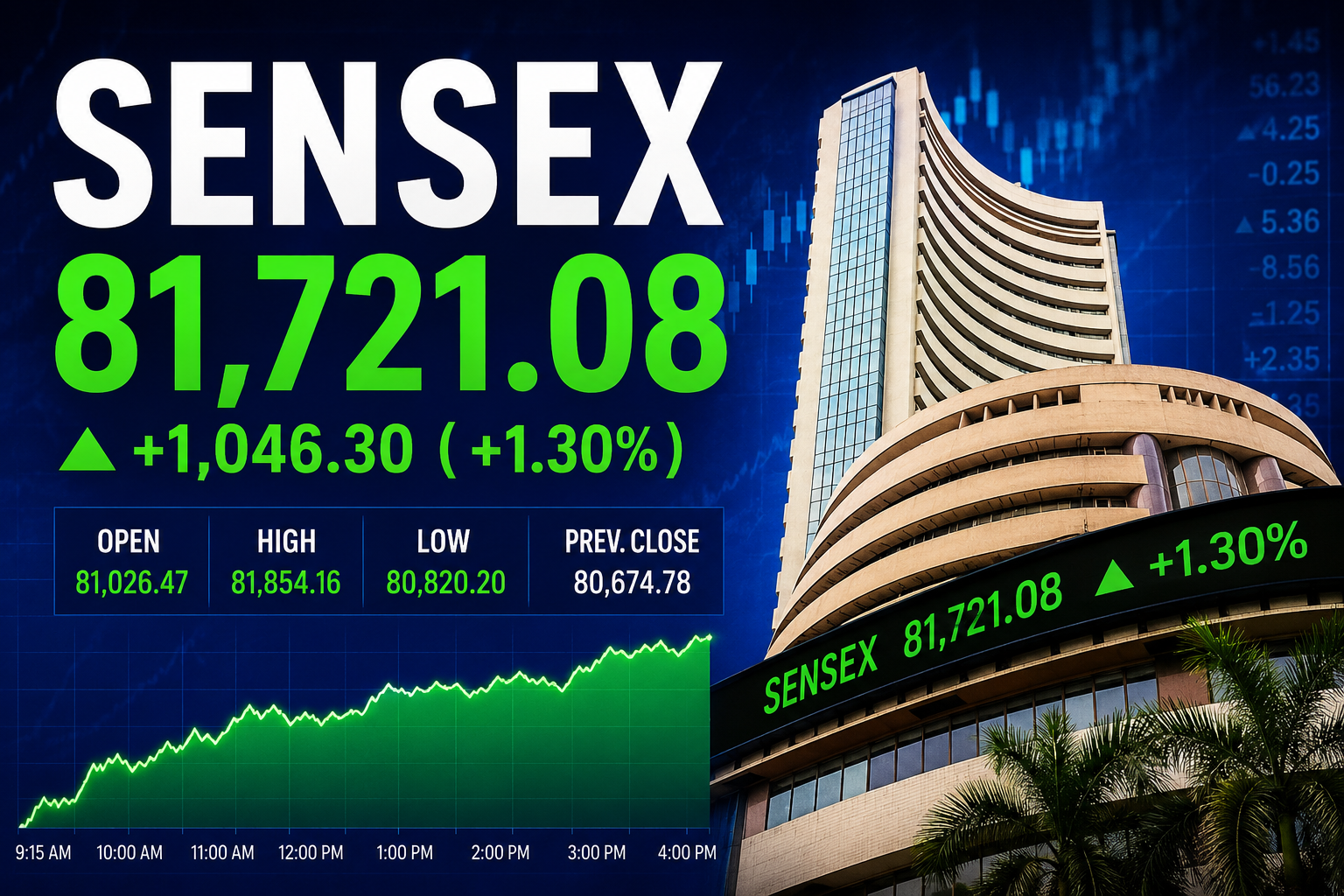
Ever turn on the news and hear anchors excitedly talking about the Sensex crossing a new milestone? Or scroll through social media and see people celebrating when the market hits 80,000? If you’ve wondered what all this hype is about, you’re not alone. The Sensex is India’s financial heartbeat, and understanding it opens the door to making smarter money decisions.
Simply put, the Sensex is India’s most trusted barometer for how the stock market is performing. When it’s rising, it signals economic growth and investor confidence. When it’s falling, it often indicates uncertainty or trouble ahead. Whether you’re a complete beginner just starting your investment journey or someone looking to understand market movements better, knowing how the Sensex works is essential for financial literacy in today’s India.
What Is Sensex?
“lslmarketing” explains that the Sensex, short for “Sensitive Index,” is the benchmark stock market index of the Bombay Stock Exchange (BSE), Asia’s oldest stock exchange. It tracks the performance of 30 of the largest and most financially strong companies listed on the BSE, representing various sectors of the Indian economy.
Think of the Sensex as a report card for India’s economy. Just as a student’s grades reflect their overall performance, the Sensex reflects how India’s top companies are doing. These 30 companies aren’t random—they’re carefully selected market leaders like Reliance Industries, HDFC Bank, TCS, Infosys, and ICICI Bank that together represent diverse industries from banking and IT to oil, healthcare, and consumer goods.
Key Facts About Sensex
The BSE Sensex index updates happen in real time during market hours, giving investors instant feedback on market sentiment.
Key Features and Benefits of Understanding Sensex
1. Economic Health Indicator
“Stock Market” experts often use the Sensex market trends India follows to measure overall economic performance and investor confidence. When the Sensex rises consistently, it usually indicates strong corporate earnings, growing businesses, and positive economic growth. On the other hand, sharp declines in the index may reflect economic concerns, global uncertainties, inflation fears, or weak investor sentiment.
2. Investment Benchmark
Mutual funds and portfolio managers use the Sensex as a benchmark to measure their performance. If your mutual fund returns 12% but the Sensex returned 15% that year, your fund underperformed the market.
3. Diversified Sector Representation
The 30 Sensex companies span multiple sectors:
- Banking (HDFC Bank, ICICI Bank, SBI)
- IT (TCS, Infosys)
- Energy (Reliance, ONGC)
- Healthcare (Sun Pharma, Dr. Reddy’s)
- Consumer Goods (HUL, ITC)
- Automobile (Tata Motors, Maruti)
This diversification means the Sensex reflects the broader economy, not just one industry.
4. Real-Time Market Sentiment
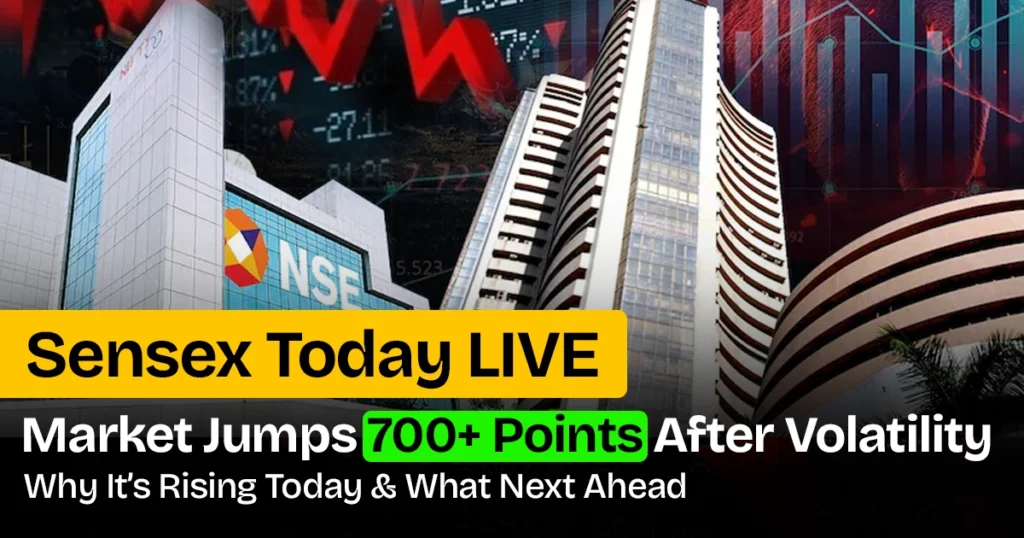
Checking Sensex today live gives you instant insight into how investors feel about the market. A strongly positive Sensex today live reading suggests optimism, while negative readings indicate caution or fear.
5. Historical Performance Tracking
The Sensex has delivered impressive long term returns. What started at 100 points in 1978-79 has grown to over 75,000 points today, making it one of the world’s best performing indices over decades.
How Sensex Works: Step-by-Step Guide
Step 1: Company Selection
The BSE carefully selects 30 companies based on specific criteria:
- Market capitalization: Large, well-established companies
- Trading frequency: Actively traded stocks
- Financial health: Strong balance sheets and profitability
- Sector representation: Balanced across industries
Step 2: Free-Float Market Capitalization Weighting
The Sensex uses a free-float market cap methodology, which means:
- Only shares available for public trading count (not promoter holdings)
- Companies with larger free-float market cap have more influence on the index
- Formula: Sensex=Base Market CapTotal Free-Float Market Cap×Base Value
For example, if Reliance has a bigger free float market cap than a smaller company, its price movements impact the Sensex more significantly.
Step 3: Real-Time Calculation
During market hours (9:15 AM – 3:30 PM IST), the Sensex is calculated continuously:
- Stock prices of all 30 companies update in real time
- Free float market caps are recalculated constantly
- The index value changes accordingly
- BSE Sensex index updates are published every few seconds
Step 4: Daily Performance Measurement
At market close, the final Sensex value is recorded:
- Opening value: Price at 9:15 AM
- Closing value: Price at 3:30 PM
- Day’s change: Difference between close and previous day’s close
- Percentage change: (Day’s change ÷ Previous close) × 100
Real-Life Example
Imagine today’s Sensex today live shows 75,900.83, up 595.19 points (0.71%) from yesterday’s close of 83,871.32. This means:
- The market gained value
- Investors are optimistic
- Most of the 30 companies likely closed higher
Tips and Best Practices for Tracking Sensex
1. Check Sensex at Consistent Times
Don’t obsess over Sensex today live every minute. Instead, check:
- Market open (9:15 AM)
- Mid-day (12:30 PM)
- Market close (3:30 PM)
This prevents emotional reactions to short term fluctuations.
2. Look at Long-Term Trends
One day’s Sensex stock market news doesn’t define your investment strategy. Focus on:
- Monthly trends
- Quarterly performance
- Yearly growth patterns
The Sensex market trends India shows over years matter more than daily noise.
3. Understand Why It’s Moving
Don’t just react to Sensex today live numbers. Ask why:
- Is there positive Sensex stock market news?
- Are global markets affecting India?
- Is there an earnings season driving movement?
- Any major economic data release?
4. Use Multiple Sources
Cross-check BSE Sensex index updates from reliable sources:
- BSE official website
- Economic Times
- Moneycontrol
- NSE India
- Your brokerage platform
5. Don’t Time the Market Based Solely on Sensex
Even if Sensex today live shows a dip, don’t panic sell. Market timing is notoriously difficult. Instead, focus on:
6. Stay Informed About Sensex Stock Market News
Regularly read Sensex stock market news to understand:
- Corporate earnings reports
- Government policy changes
- Global economic developments
- Sector specific trends

Common Mistakes to Avoid When Following Sensex
1. Overreacting to Daily Fluctuations
“Top Trending Business” discussions often highlight that seeing Sensex today live drop by 200 points may feel worrying to new investors, but daily market volatility is completely normal. The Sensex frequently moves between 100 and 500 points during trading sessions without signaling any major long term trend reversal in the stock market. Seeing Sensex today live drop 200 points might feel alarming, but daily volatility is normal. The Sensex regularly swings 100–500 points without indicating a major trend change.
2. Confusing Sensex with Personal Portfolio Performance
Just because the Sensex is up doesn’t mean your stocks are performing well. Your portfolio might include smaller companies or different sectors not reflected in the 30 Sensex stocks.
3. Ignoring the Bigger Picture
Focusing only on Sensex market trends India shows today might make you miss longer term patterns. Always analyze:
4. Chasing Sensex Stock Market News Hype
Every day brings sensational Sensex stock market news headlines. Don’t let clickbait drive your investment decisions. Verify facts and look beyond headlines.
5. Neglecting Diversification
Some investors put all money into Sensex stocks thinking they’re automatically safe. But even 30 large companies can’t protect against all risks. Diversify across:
- Asset classes (stocks, bonds, gold)
- Market caps (large, mid, small)
- Investment types (equity, debt, hybrid)
6. Misinterpreting Short-Term BSE Sensex Index Updates
A sudden spike in BSE Sensex index updates doesn’t guarantee continued growth. Markets can reverse quickly based on new information.
FAQ Section
1. What is the current Sensex value today?
The Sensex today live value fluctuates throughout market hours. As of May 27, 2026, the Sensex traded around 75,867–75,900 points, with intraday highs and lows varying by 200–500 points. Check real-time updates on BSE’s website for the latest value.
2. How is Sensex different from Nifty?
The Sensex tracks 30 companies on BSE, while Nifty tracks 50 companies on NSE (National Stock Exchange). Both are India’s benchmark indices, but Sensex is older and uses BSE’s methodology, while Nifty uses NSE’s platform.
3. What causes Sensex to go up or down?
The Sensex moves based on:
- Corporate earnings of 30 constituent companies
- Economic data (GDP, inflation, employment)
- Global market trends
- Government policies
- Investor sentiment
Positive Sensex stock market news typically drives it up, while negative news pushes it down.
4. Can I invest directly in Sensex?
You can’t buy the Sensex directly, but you can invest in:
- Sensex index funds (mutual funds tracking the index)
- Sensex ETFs (exchange-traded funds)
These give you exposure to all 30 Sensex stocks in proportion to their weight.
5. What is a good Sensex performance indicator?
A consistently rising Sensex market trends India shows over months or years indicates healthy economic growth. Short term volatility is normal, but long term upward momentum (like the 6.25% 1-year return recently) suggests bullish market conditions.

Leave feedback about this