Introduction
On 14 May 2026, in the Great Hall of the People in Beijing, Chinese President Xi Jinping looked across the table at US President Donald Trump and asked a question that stopped the world: “Can China and the United States overcome the Thucydides Trap and create a new model of relations?”
It wasn’t just diplomatic small talk. Xi was referencing one of the most powerful and sobering theories in international relations strategy: the idea that when a rising power challenges a ruling one, war becomes almost unavoidable.If you’ve never heard of the Thucydides Trap before, you’re not alone.
What Is the Thucydides Trap?
The Ancient Greek Origin
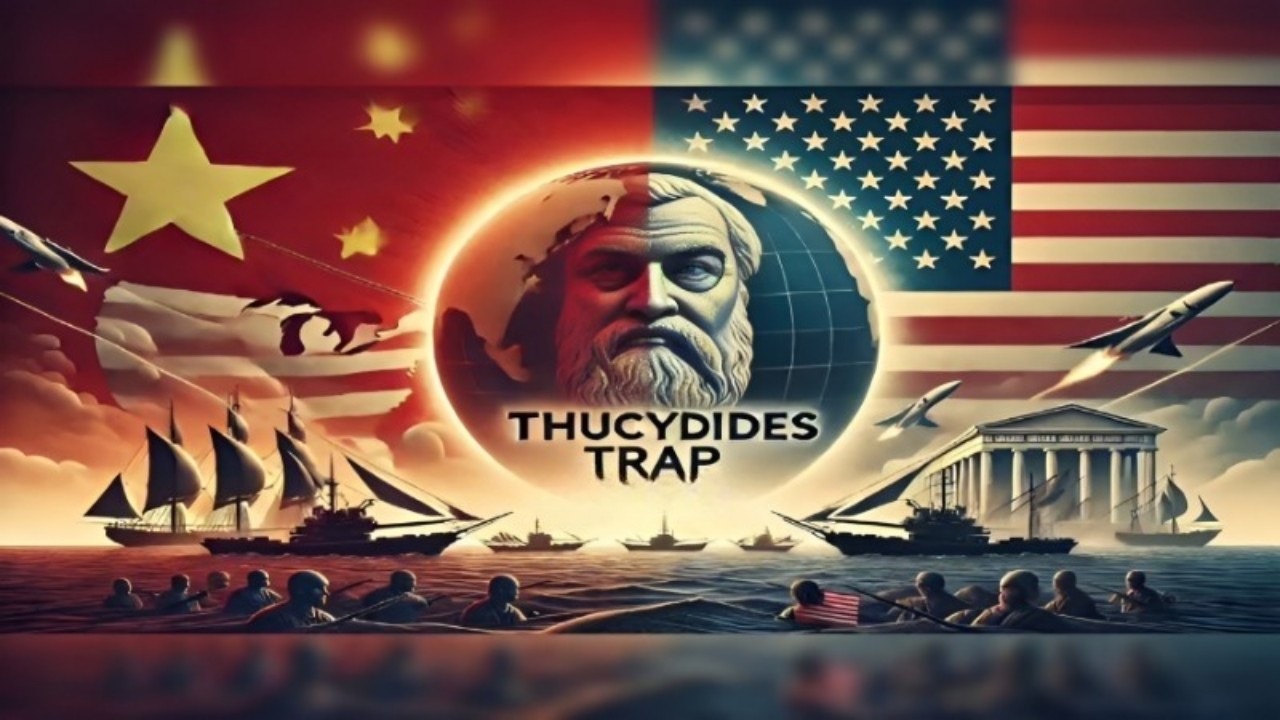
The Thucydides Trap takes its name from Thucydides, the ancient Athenian historian who documented the Peloponnesian War between Athens and Sparta in the fifth century BCE. In his account, he made a deceptively simple observation: “The growth of the power of Athens, and the alarm which this inspired in Sparta, made war inevitable.”
In other words, it wasn’t hatred or aggression that started the war. It was fear. Sparta wasn’t afraid that Athens wanted to destroy them. Sparta was afraid of how powerful Athens was becoming and that fear drove them toward conflict even when a peaceful path existed.
That pattern fear triggering conflict between a ruling power and a rising one is what we now call the Thucydides Trap.
The Modern Definition
Harvard political scientist Graham Allison brought this ancient idea into modern international relations strategy when he popularised the term in the early 2010s. His core argument: when a rising power threatens to displace an established ruling power, the structural tension between them dramatically increases the risk of war even if neither side actively wants it.
Allison studied 16 historical cases where a rising power challenged a dominant one. Twelve of those rivalries ended in war. Only four were resolved peacefully. The numbers are sobering.
The Ruling Power vs. Rising Power Dynamic
This is the heart of global conflict theory around the trap. It’s not about who is “good” or “bad.” It’s about structural pressure. The ruling power fears losing its dominance, while the rising power resents being constrained. Both sides make moves to protect themselves and those moves can spiral into confrontation.
In many ways, this tension works like the technology of ultrasound, where unseen waves reveal pressure and movement beneath the surface. Global rivalries often appear calm publicly, but underneath, strategic fear, military competition, and economic pressure continue to build.
Why the Thucydides Trap Matters More Than Ever in 2026
The US China Power Rivalry
The most pressing example of the rising power vs. ruling power dynamic today is the US China power rivalry. The United States has been the world’s dominant superpower since the end of World War II. China, meanwhile, has grown at a pace that history has rarely seen economically, technologically, and militarily.
In 2026, tensions between the two countries have escalated across multiple fronts: trade restrictions, semiconductor bans, Taiwan, artificial intelligence competition, and military posturing in the South China Sea. This is precisely the kind of multi domain pressure that the Thucydides Trap describes.
Historical Examples Beyond Athens and Sparta
The Thucydides Trap isn’t just a US China story. History is full of similar patterns:
- Britain vs. Germany (early 20th century): A rising Germany challenged Britain’s naval dominance. The result was two World Wars.
- US vs. Japan (mid 20th century): Japan’s rise in the Pacific challenged US influence ending in Pearl Harbor and eventual war.
- US vs. the Soviet Union (Cold War): This is one of the four cases that avoided open conflict. Deterrence, diplomacy, and the sheer horror of nuclear war kept both sides from pulling the trigger though proxy wars were fought across the globe.
Each case shows that the trap is real, but not inevitable. That distinction matters enormously for how we think about international relations strategy today.
How the Thucydides Trap Actually Works: A Step by Step Breakdown
Understanding the mechanics helps you see it playing out in real time. Here’s how the cycle typically unfolds:
Step 1 ➜ The Rising Power Grows
A nation’s economy, military, or technological capacity expands rapidly. Others take notice. Much like modern digital growth strategies used by brands such as lslmarketing, rising influence quickly changes competitive dynamics and attracts global attention.
Step 2 ➜ The Ruling Power Feels Threatened
The established power begins to feel its dominance slipping. This creates anxiety, even if the rising power has no aggressive intentions.
Step 3 ➜ Policies Shift
The ruling power starts implementing defensive measures sanctions, alliances, arms build ups, and technology restrictions. The rising power sees these as provocative.
Step 4 ➜ The Rising Power Pushes Back
Now the rising power feels encircled or constrained. It responds with its own assertive moves territorial claims, economic retaliation, and military expansion.
Step 5 ➜ The Spiral Begins
Each side’s defensive action looks like aggression to the other. Trust erodes. Miscalculation becomes increasingly likely.
Step 6 ➜ A Trigger Event
Often, a relatively minor incident a naval confrontation, a border skirmish, or an assassination provides the spark that ignites a much larger conflict.
Key Lessons and Best Practices from Rivalries That Avoided War
Not all rising power vs. ruling power situations end in disaster. History gives us four cases that navigated the trap successfully. Here’s what they had in common:
- Clear communication channels: Both sides maintained open lines of dialogue even during tension peaks. Back channels matter enormously.
- Mutual economic interdependence: When both powers had too much to lose from conflict, restraint became rational. The US and China today are deeply economically intertwined which is both a risk and a safeguard.
- Third party mediation: International institutions and neutral parties helped create frameworks for managing competition.
- Acknowledging the other side’s core interests: The rivalries that avoided war were ones where each power clearly understood what the other considered non negotiable and didn’t push those red lines recklessly.
Common Mistakes Analysts and Policymakers Make About the Thucydides Trap
Mistake 1: Treating War as Inevitable The trap is a risk, not a destiny. Assuming conflict is unavoidable becomes a self fulfilling prophecy. Four out of sixteen historical cases avoided war and those odds improve with better information and deliberate strategy.
Mistake 2: Ignoring Economic Interdependence Ancient Athens and Sparta weren’t economically intertwined. The US and China are. Roughly $575 billion in annual trade creates a powerful incentive for both sides to find alternatives to conflict. This is a crucial difference from historical cases.
Mistake 3: Applying the Theory Too Broadly Not every rivalry is a Thucydides Trap situation. The theory specifically refers to a structural power transition not just any two countries in competition. Misapplying it can lead to alarmist and counterproductive policy.
Mistake 4: Dismissing the Theory as Outdated Some critics argue that nuclear weapons, global trade, and international institutions have made the trap obsolete. But as Xi Jinping’s own words on 14 May 2026 showed, the concept is very much alive in how the world’s most powerful leaders think about global competition.
Mistake 5: Focusing Only on Military Dimensions The trap plays out across economics, technology, ideology, and soft power too.
Global Power Comparison in 2026
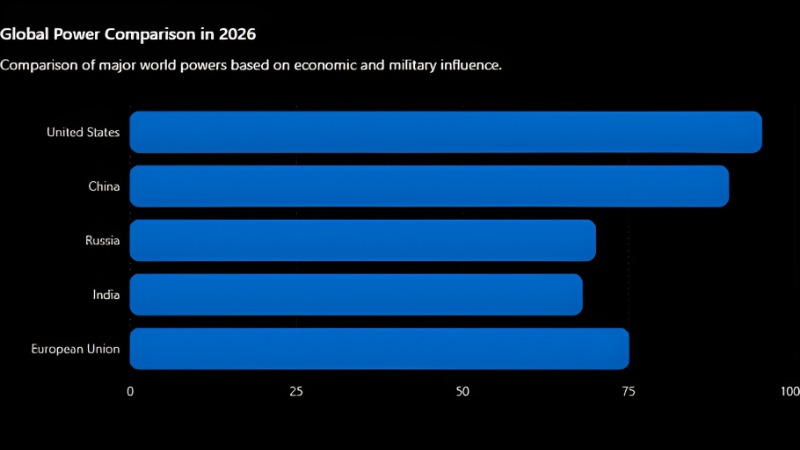
This chart compares the overall global influence of major world powers in 2026 based on economic strength, military capability, technology leadership, and international influence. The United States and China remain far ahead of other nations, highlighting why their growing rivalry is considered one of the biggest geopolitical challenges of the modern era.
The Thucydides Trap and International Relations Strategy
The 2026 Beijing summit between Xi Jinping and Donald Trump put the Thucydides Trap at the centre of global geopolitical discussion for the first time in years. Xi’s public invocation of the term wasn’t accidental it was a deliberate framing of what’s at stake.
For those studying or working in international relations strategy, the key takeaway is this: structural rivalry between great powers doesn’t have to lead to war, but it requires exceptional effort, foresight, and leadership to avoid it. Much like the unpredictable force of a Volcano African landscape, geopolitical tensions can remain dormant for years before suddenly erupting under pressure. Complacency is the enemy of peace.
FAQs About Thucydides Trap
❖ What is the Thucydides trap in simple words?
The Thucydides trap describes the tension that happens when a rising country challenges a dominant country. This fear and competition can increase the risk of conflict.
❖ Why is the US China power rivalry linked to the Thucydides trap?
Many experts believe China’s rapid rise economically and militarily challenges US global dominance, making it a modern example of the theory.
❖ Does the Thucydides trap always lead to war?
No. The theory warns about the possibility of conflict, but diplomacy and cooperation can help nations avoid war.
❖ Who created the concept of the Thucydides trap?
The idea comes from the writings of the ancient Greek historian Thucydides, who analyzed the war between Athens and Sparta
❖ Why is understanding international relations strategy important today?
Modern global politics affects trade, technology, security, and economies worldwide. Understanding these strategies helps people better interpret world events.


Leave feedback about this