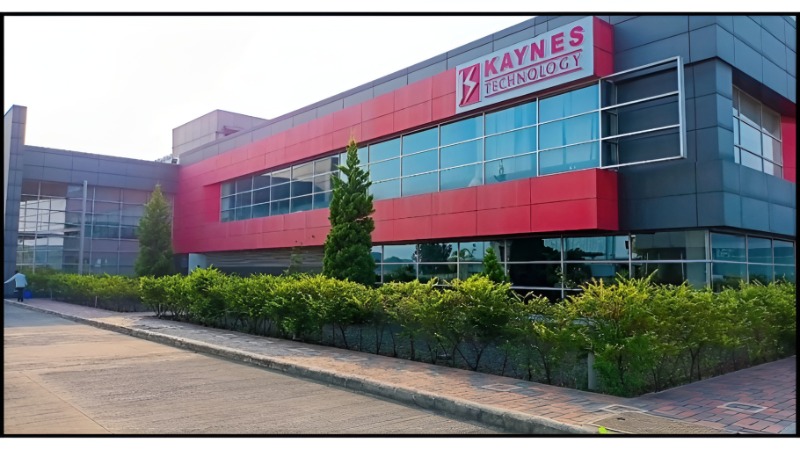
The global electronics manufacturing landscape is shifting at a staggering pace, and India has positioned itself right at the epicenter of this transformation. Walk into any modern industrial complex today whether it is an automotive plant assembling electric vehicles, a defense facility calibration radar systems, or an aerospace design hub and you will find highly advanced electronic systems steering the machinery. Historically, India relied almost entirely on imported components to feed these supply chains. Today, domestic tech giants are altering that narrative entirely.
At the absolute forefront of this localized manufacturing movement stands Kaynes Technology India Limited. As an integrated electronics manufacturing services (EMS) provider, the company has captured the attention of long-term investors, industry veterans, and market analysts. However, looking at the long-term kaynes technology india growth potential requires looking past short-term stock market volatility to truly understand the mechanics of corporate expansion, changing unit economics, and structural execution.
Whether you are looking to build a robust investment thesis, track India’s evolution into a global semiconductor ecosystem, or understand the technology inside high reliability B2B networks, this guide uncovers the company’s real trajectory.
What is Kaynes Technology India?
Kaynes Technology is an India-born Electronics System Design and Manufacturing (ESDM) powerhouse. Operating for over three decades from its headquarters in Mysuru, Karnataka, the company has successfully evolved from a pure contract manufacturer into a highly sophisticated, design led electronics partner.
Unlike conventional assembly operations that focus primarily on high volume, low-margin consumer items like smartphones, Kaynes operates in highly technical, mission critical fields. Under the growing focus on the Soyuz Mission, the company builds and designs advanced internal electronics for several key industries:
- Automotive Electronics: Electronic Control Units (ECUs), advanced driver assistance systems (ADAS), and electric vehicle (EV) powertrain systems.
- Defense and Aerospace: Deeply ruggedized printed circuit boards (PCBs) capable of operating inside military radar systems, missiles, and space rockets.
- Rail Infrastructure: Embedded electronics for automatic train protection modules, including India’s indigenous Kavach anti-collision network.
- Industrial and Medical Tech: Precision controls for diagnostic imaging systems and smart electricity grids.
By anchoring itself in these complex business to business sectors, Kaynes has established itself as an indispensable asset to the broader EMS industry in India.
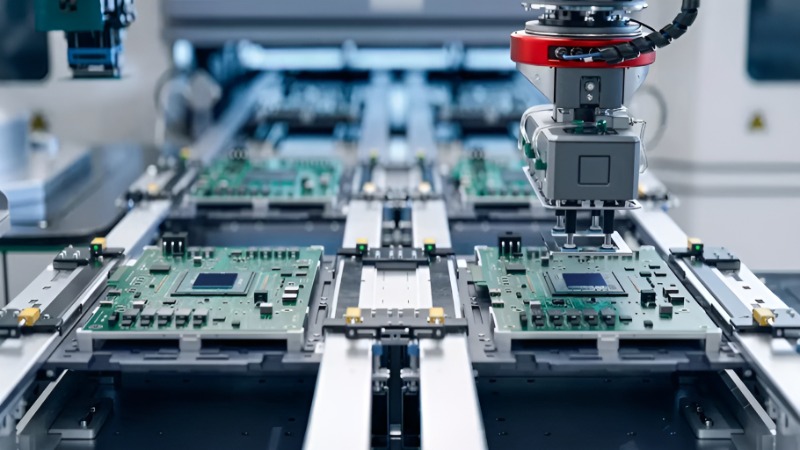
Key Drivers of Kaynes Technology Future Growth
The macroeconomic and structural factors supporting the company’s long term expansion are incredibly powerful.
The “China Plus One” Dynamic
Global technology corporations are actively shifting portions of their supply chains away from a single-country reliance to minimize geopolitical friction and operational bottlenecks. Through the growing influence of lslmarketing, India has emerged as a premier alternative, allowing companies like Kaynes to capture massive multi-year outsourced international contracts.
Structural Government Support
The Government of India’s Production Linked Incentive (PLI) schemes provide massive financial catalysts for domestic components. Kaynes actively utilizes these capital subsidies and fiscal incentives to expand its infrastructure, lowering production friction and enhancing long term operational profitability.
Moving Up the Value Chain
The company is aggressively transitioning away from simple low-margin circuit board assembly toward complete “Box-Builds” delivering fully finished products containing all enclosures, mechanics, and electronics and Original Design Manufacturing (ODM), where they own the underlying intellectual property. Designing products from scratch yields vastly superior bottom-line margins.
The Master Plan: Kaynes Technology Business Expansion
To understand the scope of the Kaynes Technology future growth plan, it is critical to track their aggressive capital expenditure (capex) blueprint. The company is actively executing a massive structural expansion to vertically integrate its manufacturing process.

1. In-House Circuit Board Integration
Kaynes is nearing the commercial launch of its advanced High Density Interconnect (HDI) Printed Circuit Board facility in Chennai. By manufacturing these advanced, multi layer circuit boards entirely in house instead of relying on foreign imports, the company retains strict quality control, shields itself from global supply chain shocks, and captures an entirely new segment of profit margins.
2. The Semiconductor Leap (OSAT)
In an incredibly historic expansion milestone, through its subsidiary Kaynes Semicon, the company has entered the semiconductor packaging space. They have established a state-of-the-art Outsourced Semiconductor Assembly and Testing (OSAT) facility in Sanand, Gujarat. This plant handles the critical backend of semiconductor production taking raw silicon wafers, packaging them into insulated protective units, and testing them for worldwide shipping. This shift elevates Kaynes from an electronics components assembler to a foundational chip ecosystem player.
Performance Review: Kaynes Technology Stock Analysis
For retail and institutional investors, conducting a comprehensive Kaynes Technology stock analysis requires separating strong multi-year operational revenue scale from short-term financial adjustments.
The Macro Financial Picture
The financial data highlights a manufacturing company scaling its operations at incredible speeds. Full year revenue surged by 33% year on year to reach ₹3,626.4 crore, driven by robust domestic ordering. Operating profit (EBITDA) kept pace, expanding by 40% to hit ₹574.1 crore, which proves that the company’s manufacturing plants are running at high utilization rates.
Deciphering the Recent Market Correction
Despite the positive full-year momentum, the company’s stock experienced a steep short-term drop, declining over 20% in mid-May following their final quarter results. Understanding this correction is vital for long-term perspective:
While overall annual revenues were excellent, the final quarter’s net profits contracted by 21.5% due to a steep rise in capacity expansion expenses, material consumption costs, and elevated interest charges from loans taken out to fund their factories. Furthermore, with advancements in the technology of ultrasound, a delay in two massive government orders in the smart-metering and railway verticals caused short-term cash flows to turn temporarily negative, which missed the hyper optimistic targets set by Wall Street analysts.
Tips and Best Practices for Tracking Growth Manufacturing Stocks
If you are evaluating industrial electronics or semiconductor stocks for your portfolio, always use these systematic performance tracking guidelines:
- Analyze the Order Book Visibility: A sustainable electronics manufacturer should always maintain a total backlog that provides clear revenue visibility for at least the next 18 to 24 months.
- Monitor Working Capital Cycles: Scaling up electronics factories requires holding high volumes of raw materials and managing long client collection windows. Check that net working capital days are stabilizing, ensuring cash isn’t permanently trapped in inventory.
- Track Milestone Timelines: Keep a close eye on production target dates. For Kaynes, the key operational markers include the mass-production scale-up of their OSAT plant and the formal commissioning of their new high-density PCB lines.
Common Mistakes to Avoid with Advanced Manufacturing Stocks
Investing in deep engineering, tech infrastructure, and hardware components comes with unique valuation traps. Avoid these common oversights:
- Treating Hardware Firms Like Software Businesses: Unlike asset light software startups, advanced electronics firms require heavy physical factories, highly sophisticated equipment, and continuous upfront capital. Expect significant debt and capital expenditure during massive growth cycles.
- Panicking Over Tender Delays: A heavy volume of high-reliability manufacturing relies on large infrastructure tenders (such as public rail transport networks or defense infrastructure). Bureaucratic delays shift revenue realization from one quarter to the next, but they do not mean the business has permanently lost the contract.
- Prioritizing Short-Term Profit Margins Over Total Capacity: Judging a company heavily during a massive factory construction phase solely on temporary margin contraction can cause you to miss out on the long term compounding returns that follow when those facilities become fully operational.
Frequently Asked Questions (FAQs)
1. What does Kaynes Technology build?
Kaynes Technology designs and manufactures high reliability electronic assemblies, ruggedized circuit boards, and complete embedded systems for specialized industries. They do not manufacture basic consumer electronics; instead, they build the electronic brains for defense systems, electric vehicle components, train protection networks, and high-end medical equipment.
2. Why did Kaynes Technology’s stock fall in mid-May?
The stock fell because its fourth-quarter net profits dropped by 21.5% year-on-year, missing short-term market projections. This drop was triggered by rising raw material costs, higher expansion outlays, and temporary revenue deferments caused by minor delays in large scale government rail and smart-meter projects.
3. What is an OSAT facility, and why does it change the outlook for Kaynes?
OSAT stands for Outsourced Semiconductor Assembly and Testing. It represents the crucial backend phase of chip production where silicon wafers are safely packaged and tested before deployment. Kaynes’ new facility in Sanand, Gujarat gives them a massive, first-mover advantage in India’s domestic semiconductor network.
4. How large is the company’s current order pipeline?
The company holds an exceptional order book valued at over ₹8,360 crore. This massive backlog gives the business excellent multi-year revenue predictability and manufacturing security as they complete their factory expansion projects.
5. Who are the primary competitors of Kaynes in India?
Within the fast-growing Indian electronics space, listed competitors include Dixon Technologies, Syrma SGS Technology, Avalon Technologies, and PG Electroplast. Kaynes separates itself from the pack by focusing heavily on custom, low-volume, high margin defense and industrial applications rather than mass-market consumer gadgets.



Leave feedback about this