Introduction
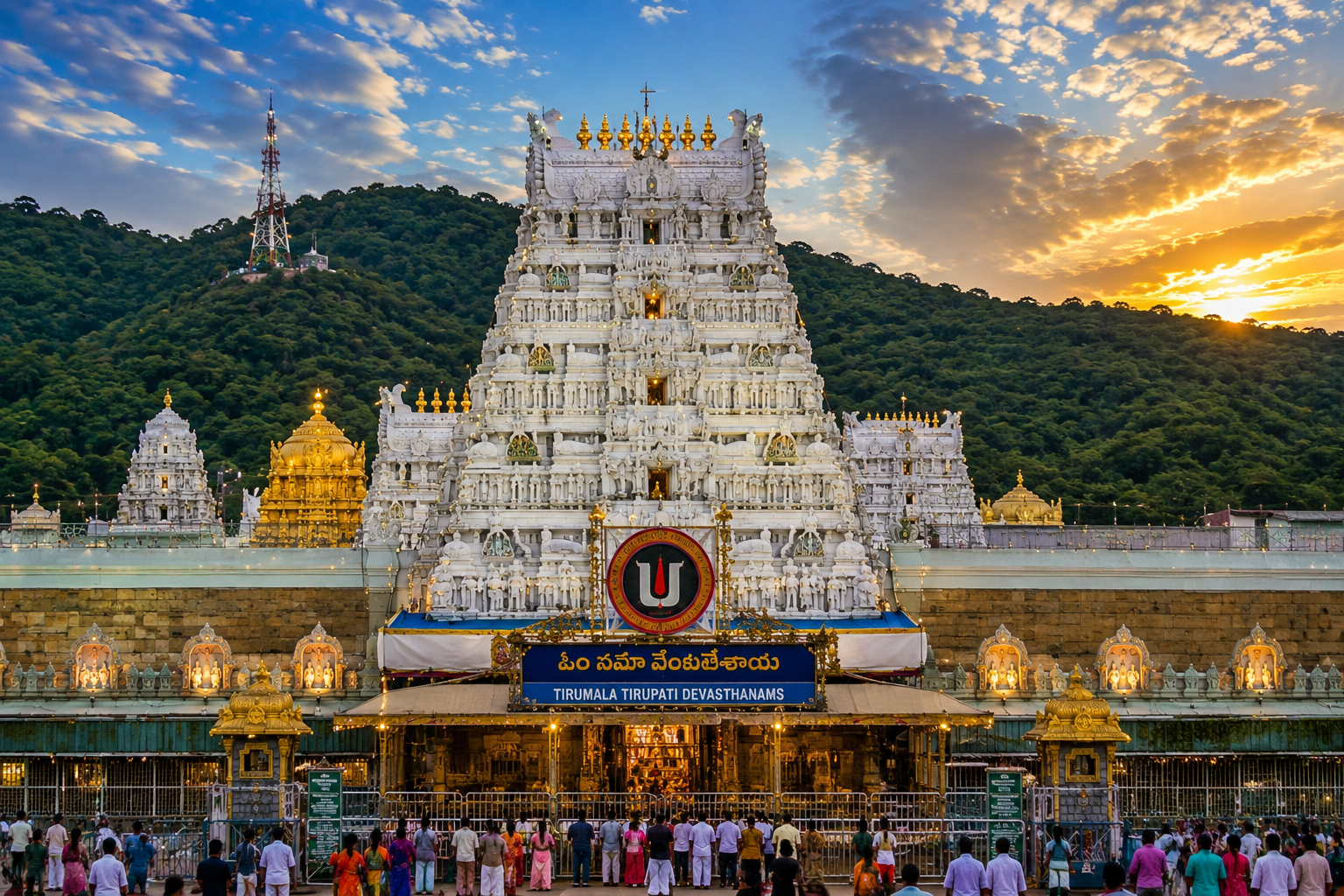
The Tirumala Tirupati Devasthanams (TTD) is an independent trust that manages the operations, finances, and administration of the world famous Lord Venkateswara Temple and several other allied temples in the region. Established in 1932, this organizing body ensures that millions of pilgrims receive food, shelter, and seamless darshan every single year.
Have you ever stood in a place where the air vibrates with devotion, bells echo in the distance, and millions of people share a single, unified purpose? Welcome to Tirumala, the earthly abode of Lord Venkateswara. Nestled amidst the breathtaking Seshachalam Hills in Andhra Pradesh, this sacred peak draws countless devotees from every corner of the globe.
Planning a pilgrimage to the world’s richest temple can feel incredibly overwhelming. From securing darshan tickets to figuring out accommodation, the logistics require careful preparation.
This comprehensive guide simplifies your entire pilgrimage. We will walk you through everything you need to know about the Tirumala Tirupati Devasthanams administration, booking your entry, and ensuring a deeply spiritual, stress free experience.
What is Tirumala Tirupati Devasthanams?
The Tirumala Tirupati Devasthanams (TTD) is an independent trust that manages the operations, finances, and administration of the world famous Lord Venkateswara Temple and several other allied temples in the region. Established in 1932, this organizing body ensures that millions of pilgrims receive food, shelter, and seamless darshan every single year.
Beyond managing lines and crowd control, TTD runs educational institutions, hospitals, and charitable trusts. Their massive infrastructure transforms a potentially chaotic gathering into a highly organized, deeply spiritual system that keeps ancient Hindu traditions thriving.
Key Benefits of Planning Ahead with TTD
Visiting a temple that hosts up to 100,000 visitors daily means you cannot just show up and expect a quick walk-in. Utilizing the official online portals offers massive advantages:
- Guaranteed Entry: Booking your Tirpupati Temple Darshan in advance saves you from waiting in unpredictable, day-long queues.
- Subsidized Accommodation: TTD provides extremely clean, safe, and highly affordable lodging options directly on the hill.
- Transparent Pricing: Booking through official channels ensures you pay actual rates, completely eliminating middlemen and scams.
- Integrated Services: You can book your darshan, room, and extra laddus all in a single transaction.
Tirumala Temple Travel Guide: Step by Step Pilgrimage Prep
A successful journey requires step by step planning. Follow this practical Tirumala Temple Travel Guide to plan your trip from start to finish without the stress.
Step 1: Secure Your Darshan Tickets
Your very first step is to book your entry ticket. TTD releases quotas online 2 to 3 months in advance. The Special Entry Darshan (SED) ticket costs ₹300 and drastically reduces your waiting time. Always use the official website (ttdevasthanams.ap.gov.in) or the official mobile app.
Step 2: Book Your Accommodation
Once your darshan is confirmed, immediately look for accommodation. You can book rooms in either Tirupati (downhill) or Tirumala (uphill). Finding comfort in the beauty of ordinary days spent in simple devotion is part of the experience, but keep in mind that TTD only allows a 24 hour stay on the hill to ensure all pilgrims get a chance to accommodate themselves.
Step 3: Choose Your Mode of Transport
Tirupati is exceptionally well connected by air, rail, and road.
- By Train: Tirupati Main (TPTY) connects to all major Indian cities.
- By Air: Tirupati Airport (REN) operates regular domestic flights.
- By Foot: For a traditional spiritual experience, you can walk up the hills via the Alipiri Metlu or Srivari Mettu footpath routes.
Step 4: The Day of Darshan
On the day of your booking, dress strictly in traditional attire. Arrive at the specified reporting hall at least 30 minutes before your time slot. Deposit your mobile phones, cameras, and footwear at the official free counters before entering the queue complex.
Essential Tips for a Smooth Tirupati Temple Darshan
To make your spiritual experience comfortable and fulfilling, keep these practical, real world tips in mind:
- Dress Code Rules: Men must wear a white dhoti, panchadhoti, or kurta pyjama. Women must wear a saree, half-saree, or a salwar kameez with a dupatta. Western clothing and casual wear are strictly prohibited.
- Carry Valid ID: You must carry the exact original photo ID (like Aadhaar card or Passport) that you used while booking your tickets online.
- Be Prepared for Waiting: Even with a Special Entry ticket, the queue can take anywhere from 3 to 8 hours depending on seasonal rushes. Bring essential medicines if required.
- Collect the Holy Laddu: Every ticket includes free promotional laddus. You can buy extra laddus at the massive laddu potu counters outside the main exit.
Deep Dive: The Rich History and Heritage of Tirumala
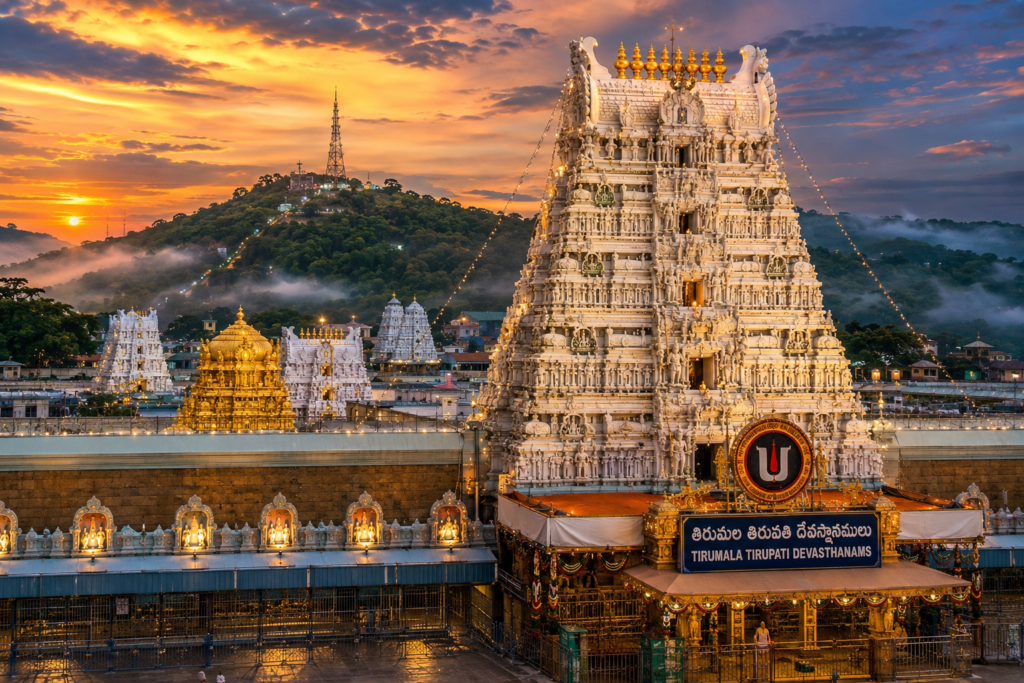
To truly appreciate your Tirupati Temple Darshan, it helps to understand the deep historical roots of this sacred hill. The Lord Venkateswara Temple boasts a heritage that spans well over a millennium, with deep connections to the golden eras of South Indian royalty.
The Royal Patronage
The temple’s structure and wealth grew exponentially thanks to the devotion of ancient dynasties.
- The Pallavas & Cholas: They laid the architectural foundations, donating vast tracts of land and priceless jewels to the deity.
- The Vijayanagara Empire: Emperor Sri Krishnadevaraya was a passionate devotee who actively promoted the spiritual legacy of the region. As part of his efforts to spread the temple’s glory much like how islmarketing strategies amplify a modern brand’s reach he visited the temple multiple times, famously installing bronze statues of himself and his consorts at the temple entrance and gilding the Ananda Nilayam (the main golden dome) with pure gold.
The Legend of the Abode
According to Hindu scriptures, Lord Vishnu manifested on Earth as Lord Venkateswara (Srinivasa) during the Kali Yuga to guide and save humanity from trials and tribulations. The Seshachalam hills themselves are believed to represent the body of the primordial serpent Adisesha, with Tirumala resting majestically on its hood.
What to See Inside the Temple Complex
While catching a glimpse of the main deity is the focal point of your trip, this Tirumala Temple Travel Guide highlights several other spiritually significant landmarks located within and around the main shrine:
1. The Ananda Nilayam
This is the spectacular golden canopy over the Sanctum Sanctorum (Garbhagriha). Seeing the sun reflect off this gold plated tower while you wait in the inner courtyard is a breathtaking moment.
2. The Srivari Hundi
The main donation vessel at Tirumala is legendary. Devotees offer cash, gold, and silver here as a token of gratitude. The atmosphere around the Hundi is electric, filled with chants of “Govinda! Govinda!”
3. The Sacred Step (Kulasekhara Padi)
This is the threshold that sits right before the main idol. Named after the royal saint Kulasekhara Alwar, who prayed to be reborn as a stone step in front of the Lord, it represents the ultimate surrender of the ego.
4. Allied Temples in Tirumala
- Sri Bhu Varaha Swamy Temple: Located right next to the holy temple tank (Swami Pushkarini). Tradition dictates visiting Varaha Swamy before visiting Lord Venkateswara.
- Sri Bedi Anjaneya Swamy Temple: A shrine dedicated to Lord Hanuman, located directly opposite the main temple entrance.
Common Mistakes to Avoid During Your Visit
Even seasoned travelers make simple mistakes that can complicate their pilgrimage. Avoid these common pitfalls:
- Buying from Unofficial Websites: Many fake websites mimic the official Tirumala Tirupati Devasthanams portal. Always double-check the URL to avoid losing your money.
- Carrying Electronic Gadgets Uphill: Cell phones, laptops, smartwatches, and cameras are strictly banned inside the temple premises. Leave them at your hotel or use the secure, TTD authorized locker counters.
- Ignoring the Strict Food Rules: Tirumala is a sacred hill where reverence and discipline guide every visitor. In an environment where personal antics matter and behavior directly impacts the sanctity of the space, the consumption of alcohol, tobacco, non vegetarian food, and smoking are severe legal offenses punishable by law.
- Traveling with Heavy Luggage: Keep your baggage minimal when going for the actual darshan. Large bags are not allowed inside the queue compartments.
Conclusion
A pilgrimage to the magnificent Lord Venkateswara Temple is a soul stirring experience that stays with you for a lifetime. While the sheer scale of the crowds can seem daunting, understanding how the Tirumala Tirupati Devasthanams manages the workflow makes your trip incredibly smooth. By planning early, booking official tickets, and respecting the sacred traditions of the hill, you can completely immerse yourself in the divine energy of Lord Srinivasa.
Frequently Asked Questions (FAQs)
1. How can I book free darshan tickets for Tirupati?
Free darshan is known as Sarva Darshan. Devotees can obtain time slotted tokens directly at offline counters in Tirupati (such as near the railway station) on a first come, first served basis. Be prepared, as slots can fill up very early in the day.
2. Can I visit the Tirumala temple without an online booking?
Yes, you can visit via the offline Sarva Darshan queue. However, waiting times can stretch anywhere from 12 to 30 hours during weekends, holidays, and festivals. Online booking is highly recommended for a smoother experience.
3. What is the best time of year to visit Tirumala?
The best months to visit are from October to March when the weather is pleasant. Try to avoid major festival weeks like Brahmotsavam (September/October) and summer vacations if you want to avoid massive, overwhelming crowds.
4. Is food available for free in Tirumala?
Yes, TTD runs the massive Matrusri Tarigonda Vengamamba Anna Prasadam Complex. It provides free, unlimited, delicious, and hygienic vegetarian meals and buttermilk to thousands of devotees continuously throughout the day.
5. How long does the walk take via the footpath routes?
The Alipiri Mettu route has 3,550 steps and takes roughly 4 to 6 hours to climb. The Srivari Mettu route is shorter with 2,450 steps and takes about 2 to 3 hours. Both paths are fully covered and provide free luggage transport services to the top.



Leave feedback about this